Exemple Page De Garde Dossir
Okay, so picture this: last week, I'm rummaging through a pile of old university papers (don't judge, we all do it!), and I stumble upon... the horror... my meticulously crafted history dissertation. But wait, the actual dissertation is... gone. Lost to the abyss of time and bad storage. All that remains is the perfectly formatted, utterly pristine page de garde.
Seriously, I spent more time on that title page than on half the bibliography! And it got me thinking: why do we obsess over these things? Is it a subconscious desire to impress before anyone even reads the juicy content? Probably.
Because let's be real, the page de garde – the title page of a dossier, mémoire, or report – it's the VIP guest before the actual party. It's the handshake before the deal. It's the... well, you get the picture. It's important. But is it really that important to warrant hours of painstaking formatting?
Must Read
What's the Big Deal with the Page de Garde?
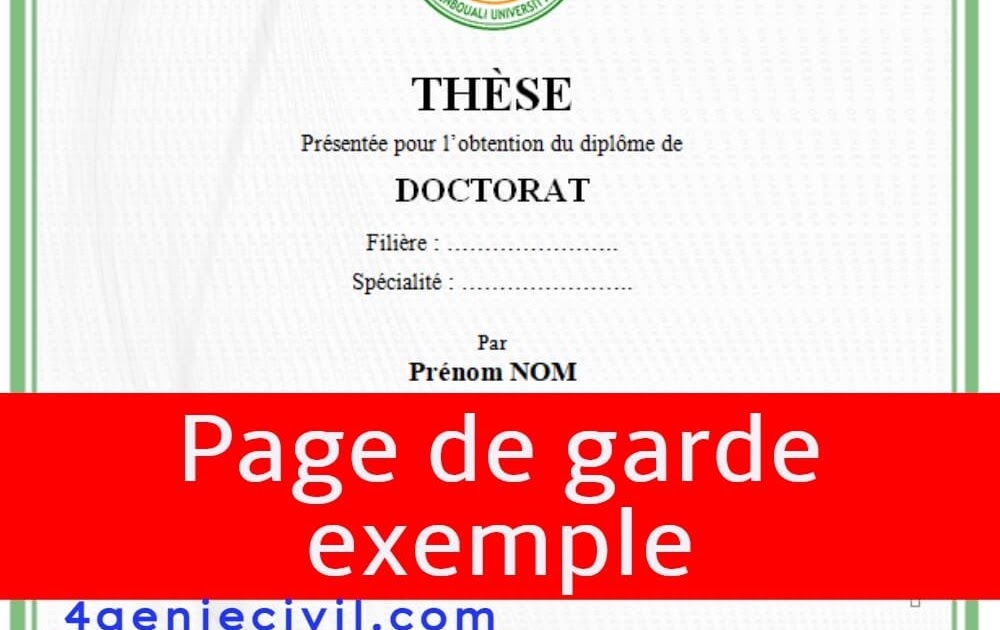
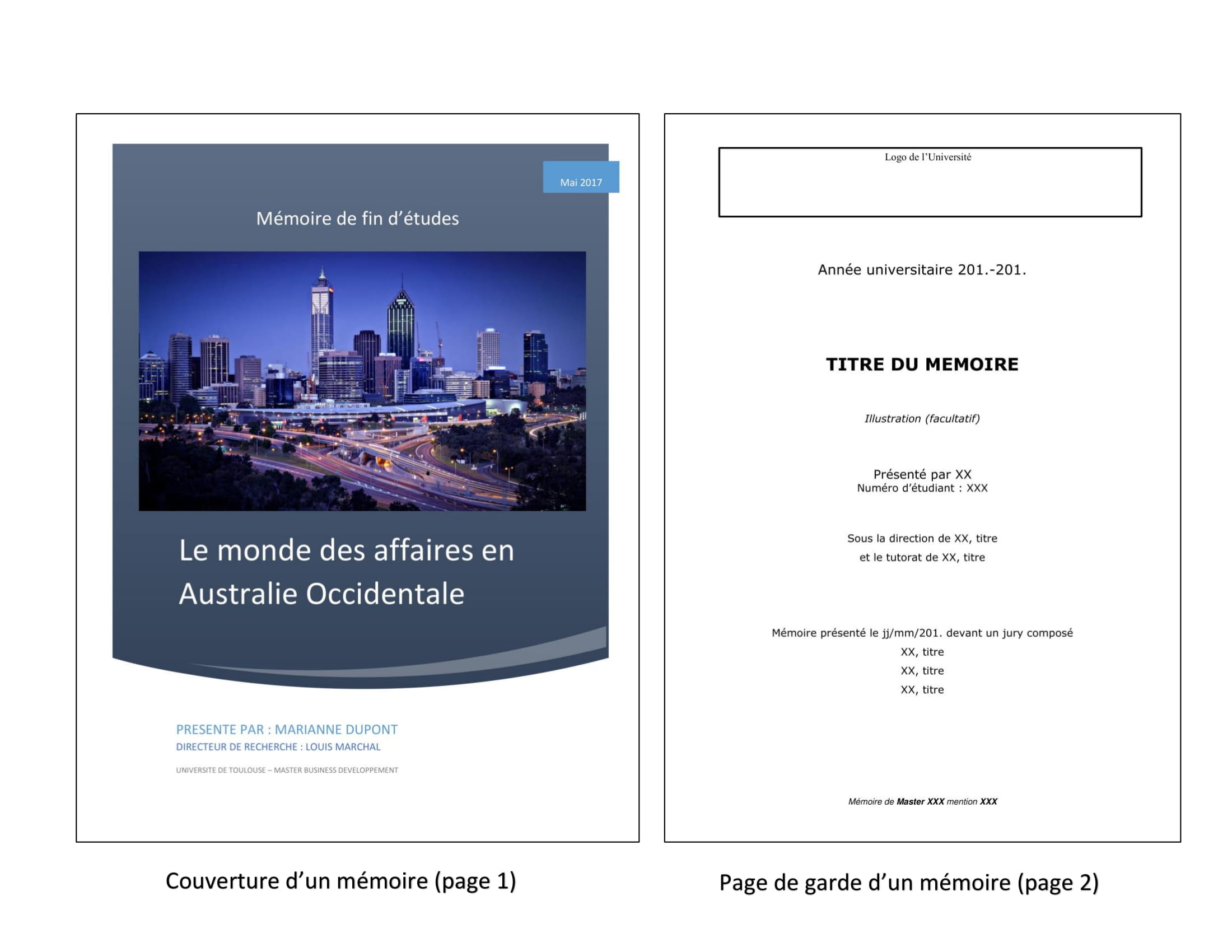
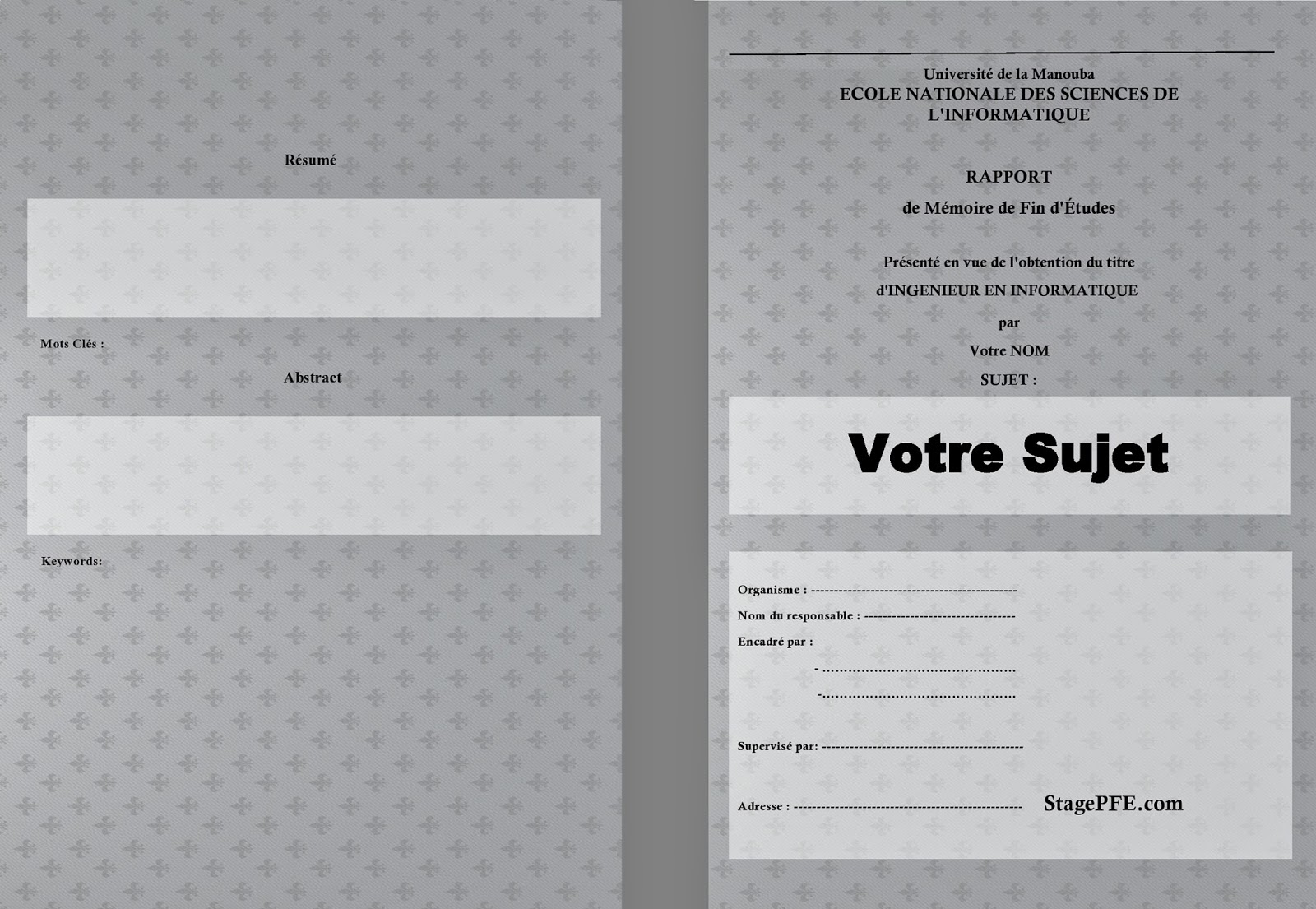
The main purpose of a page de garde is pretty straightforward: to provide all the essential information at a glance. Think of it as your document's business card.
It usually includes:

- The title of your document (obviously!).
- Your name and student number (if applicable).
- The name of your institution or organization.
- The date of submission.
- The type of document (e.g., "Mémoire de Master," "Rapport de Stage," "Dossier de Candidature").
- Sometimes, the logo of the institution.
Simple, right? So why the stress? Good question!
Because, and let's be honest, presentation matters. A well-designed page de garde can subtly influence the reader's perception of your work. It screams "I'm organized! I'm professional! I've got my life together!" (Even if you're actually running on three hours of sleep and copious amounts of coffee... we've all been there).
Tips for a Page de Garde That Doesn't Suck (Too Much)
Keep it clean and simple. Resist the urge to use every font and color available. Seriously, please resist. A clear, legible font (like Times New Roman, Arial, or Calibri) is your best friend.

Use a template (if available). Many institutions provide templates for pages de garde. Use them! It will save you time and ensure that you meet the required formatting guidelines. (Pro-tip: even if they don't explicitly provide one, check their website. You might be surprised.)
Pay attention to alignment and spacing. Ensure that all elements are properly aligned and that there is enough white space to make the page visually appealing. No one wants to read a page de garde that's cluttered and overwhelming. (Side note: Seriously, learn to love the "Insert Space Before Paragraph" option.)
![[Docx] Exemple page de garde pour une mémoire gratuite - RapportDeStage](https://2.bp.blogspot.com/-TugECltRS88/U9KhshXdV0I/AAAAAAAAB-8/kbZflLpnFuM/s1600/[Docx]+Page+de+garde+pour+un++rapport+de+stage.jpg)
Double-check your information. Nothing is more embarrassing than submitting a page de garde with a typo in the title or your name. Always double-check! And then have someone else double-check it for you.
Don't overthink it. At the end of the day, the content of your document is what really matters. A beautiful page de garde won't magically transform a poorly written essay into a masterpiece. So, spend a reasonable amount of time on it, but don't let it consume you. Get the basics right, then move on to the stuff that really counts. You got this!
Now, if you'll excuse me, I'm going to go search for that missing dissertation again. Wish me luck!
![[Docx] Exemple page de garde pour un rapport de stage](https://1.bp.blogspot.com/-3hgiuQJW3L0/VSRMyJOFRwI/AAAAAAAACgg/3nTUntcOn0w/s1600/page%2Bde%2Bprésentation%2Bmémoire%2Bpage%2Bde%2Bprésentation%2Bmémoire%2Bpage%2Bde%2Bprésentation%2Bmémoire%2Bpage%2Bde%2Bprésentation_mémoire.PNG)
![[DOC] Exemple page de garde word pour un rapport PFE ~ maplisten](https://3.bp.blogspot.com/-h_lQMTlvjg4/VU37ec0T8GI/AAAAAAAACkQ/AdJo-OlWKrM/s1600/page%2Bde%2Bgarde%2Bword%2Bde%2Bpfe%2Bmodele%2Bpage%2Bde%2Bgarde%2Bformat%2Bword%2B2015.png)

![[WORD] Exemple d page de garde gratuit pour une mémoire](https://4.bp.blogspot.com/-4TJBn2CtOpA/XIJnmTqtLyI/AAAAAAAADZE/v0ZCNqH2uDwT_RJrL-6XKUuaLwo_rtZhwCLcBGAs/s640/exemple_page_de_garde_2019_word_certicate.PNG)